During my recent stay in Ho Chi Minh, I visited “Sushi Tiger” for the second time, following last year’s visit. This restaurant on Le Thanh Ton Street has actually become one of my favorites.
What I Ate at Sushi Tiger
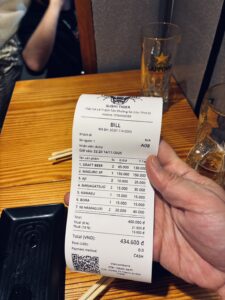
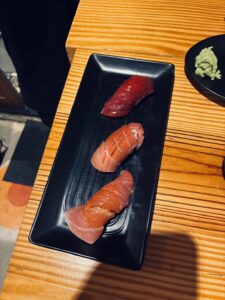
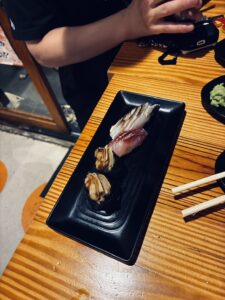
This time I ordered 3 pieces of tuna, 2 pieces of horse mackerel, 2 pieces of butterfish, plus kamasu (barracuda), mullet, and ni-hamaguri (clams). Together with 2 draft beers, the total came to 434,600 dong (about $17 USD). In Japan, this same meal would easily cost over $30, so the cost performance is outstanding.
What struck me was how all the fish had little fat and tasted quite light. According to my friend who joined me, “Vietnamese fish generally don’t have much fat.” Indeed, the horse mackerel, mullet, and butterfish were all noticeably leaner compared to what I’m used to eating in Japan.
Mullet with Blood Line Left On—But No Fishy Smell!
Here’s something that surprised me as a sushi chef: the mullet. When I serve mullet, I completely remove the blood line on the skin side. This is a standard preparation to eliminate any fishy smell, and I believe it’s almost common practice in the industry.
However, Sushi Tiger’s mullet had the blood line left on. “Wait, won’t this smell fishy…?” I thought as I put it in my mouth, but there was no fishy smell at all! In fact, it was delicious. This genuinely surprised me.
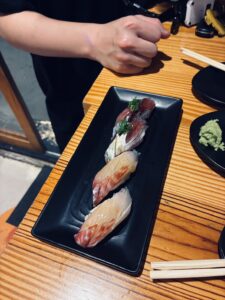
The fishiness of mullet largely depends on water quality. The reason mullet has a bad reputation for smelling fishy in Japan is that we often encounter mullet caught in estuaries or bays with poor water quality. At Sushikawa, we use offshore mullet, but even then, we remove all the blood line from the skin to eliminate any smell. Yet in Vietnam, even with the blood line left on, there’s no fishy smell. This mullet was probably raised in clean offshore waters.
Here I realized something important. I was taught to “discard the blood line” and have always done so, so I’ve actually never tasted it (laughs). Question common sense, right? Next time I prepare mullet, I’ll try tasting the skin’s blood line. Perhaps the blood line of offshore mullet is actually more delicious than I think. This is a good example of how environment directly affects fish flavor.
Is This Really Butterfish? Might Be a Different Species
Another thing that caught my attention as a sushi chef was the butterfish. The display case labeled it “MANAGATSUO BUTTER FISH,” so I ordered it, but it looked completely different from the managatsuo I know.
Japanese managatsuo has a blackish silver color with metallic luster. However, Sushi Tiger’s managatsuo had red and white stripe patterns. “These patterns never appear on Japanese managatsuo…” I felt something was off.
After returning to Japan, I researched and found that the fish sold as “MANAGATSUO” or “BUTTERFISH” in Vietnam is likely a different species from Japanese managatsuo (scientific name: Pampus punctatissimus). It’s probably a fish from the Silver Pomfret (scientific name: Pampus argenteus) family, possibly called Golden Pomfret.
However, since I couldn’t find detailed images of the skin pattern despite my research, I can’t say for certain if this was the fish. It might not even be a Pomfret species—it could be a completely different fish. In Vietnam, commercial names sometimes differ from actual species, so this remains a question for the future.
Japanese managatsuo is characterized by blackish silver coloring with large, sickle-shaped dorsal and anal fins. Vietnamese Pomfret species, on the other hand, have silver-white or golden body colors, and some varieties have patterns. Even with the same name “managatsuo,” they might actually be different fish.
If you’re curious, try image searching “マナガツオ Pampus punctatissimus” and “Silver Pomfret Pampus argenteus.” The visual differences are quite obvious.
Why Do Vietnamese Fish Have Less Fat?
I think this relates to water temperature. Vietnam’s coastal waters are warm year-round, so fish don’t need to store much fat. Japanese fish, especially those in autumn and winter, accumulate plenty of fat to cope with cold waters. Fish growing in warm waters like Vietnam don’t have this need.
From a sushi chef’s perspective, this is quite a significant challenge. As a recent global trend, “fatty fish” is highly valued for inbound sushi tourism. Popular items like toro and fatty salmon are典型 examples. Competing with only local Vietnamese fish is a tough environment.
Of course, importing fish from Japan is an option, but the wholesale cost doubles. Yet when selling sushi in Ho Chi Minh, prices are either comparable to Japan or half the price at cheaper places. Making a profit is genuinely difficult.
Yet Sushi Tiger’s Shari Is Excellent
Still, even though the fish is lean, Sushi Tiger’s shari (sushi rice) was as delicious as last year. The balance of acidity and saltiness is good, and the texture that melts in your mouth is perfect. For 434,600 dong in Vietnam, this quality is beyond reproach.
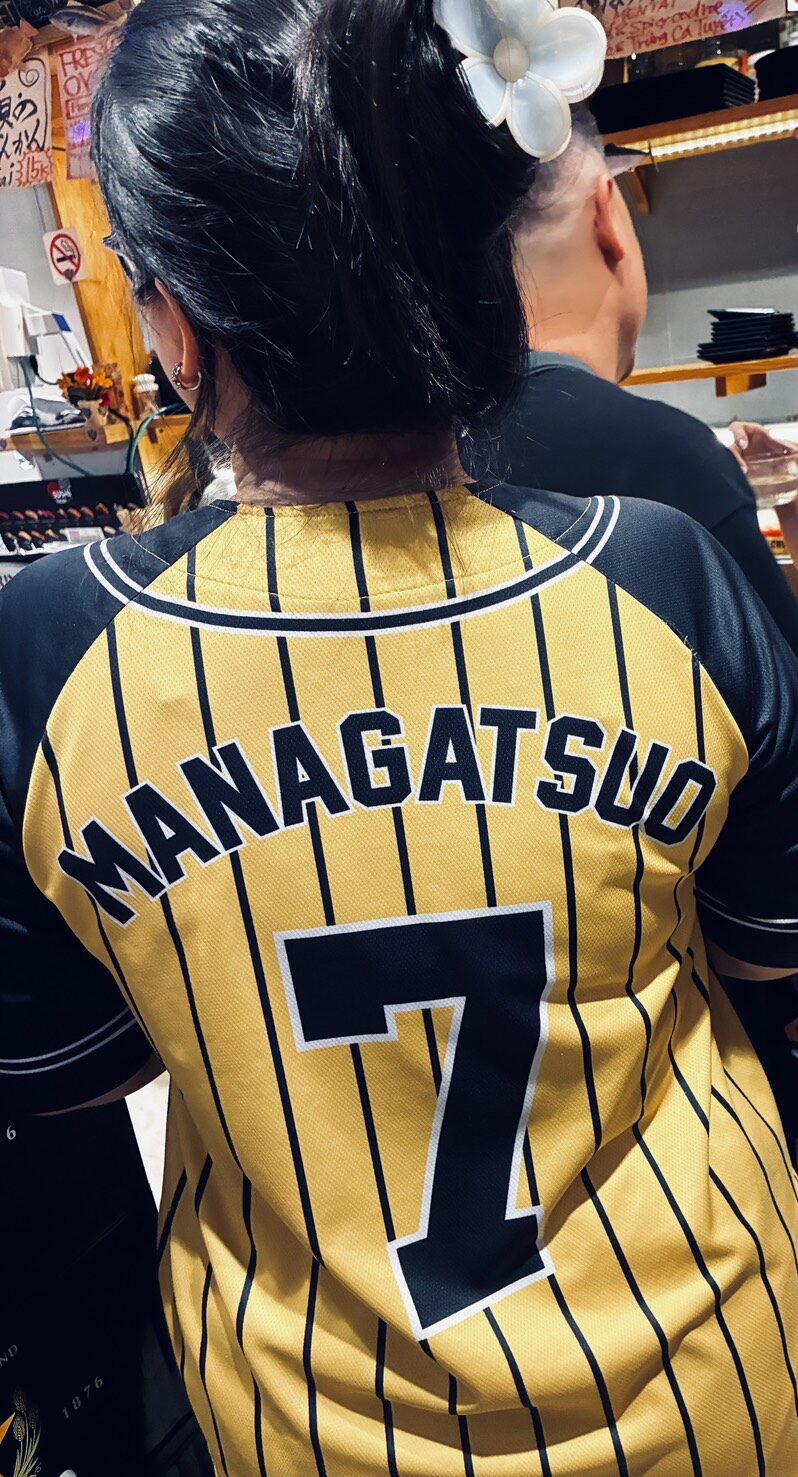
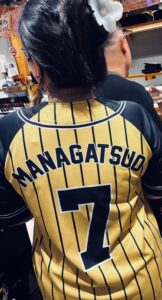
Finally, I got to snap a photo of a staff member wearing a uniform with “MANAGATSUO” written on the back. Where on earth do you even buy something like that (laughs)? It’s a moment that captures Sushi Tiger’s playful spirit.
Another Restaurant in Pham Viet Chanh
After Sushi Tiger, I also stopped by another restaurant in the Pham Viet Chanh area. I don’t remember the name, but it was also reasonably priced.
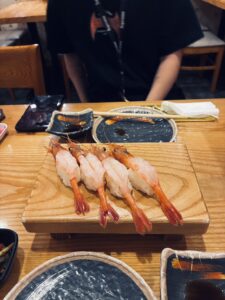
Here I enjoyed a variety of items including shrimp sushi (as you can see in the photo, it was fresh shrimp with the head still on), scallop gratin-style, and creative dishes resembling pressed sushi.
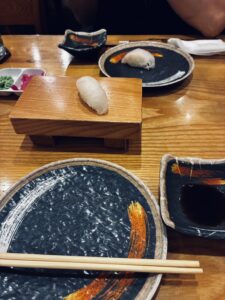
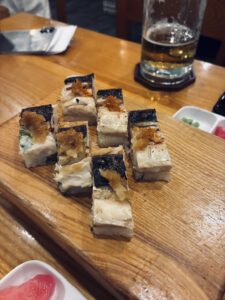
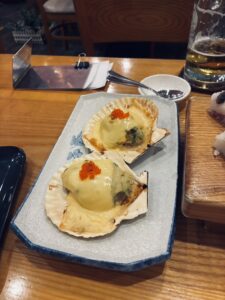
Compared to Sushi Tiger, the shari was sweet and I didn’t sense much saltiness. This might be adapted to Vietnamese local tastes. Considering the price, the taste was quite satisfactory.
What’s Next for Ho Chi Minh’s Sushi Scene?
After visiting two restaurants, I feel that Ho Chi Minh’s sushi industry faces two challenges: “price competition” and “ingredient quality.”
Using local fish keeps costs down, but the fish is lean and light. Importing from Japan raises quality, but doubles the price and loses competitiveness. Each restaurant is innovating within this dilemma.
But lean fish isn’t bad. It’s light and refreshing, allowing you to eat more. For us Japanese, it might actually be reminiscent of old-school Edomae sushi. It’s important to remember that fatty fish isn’t the only kind of sushi.
Conclusion: Best Value Sushi in Ho Chi Minh
While Vietnamese fish are characteristically low in fat, considering the balance of price and quality, Ho Chi Minh’s sushi is thoroughly enjoyable. Especially at restaurants like Sushi Tiger that focus on quality shari, satisfaction is high.
Next time I visit Ho Chi Minh, I’d like to explore more sushi restaurants. This city’s sushi scene seems to have much more depth to discover.