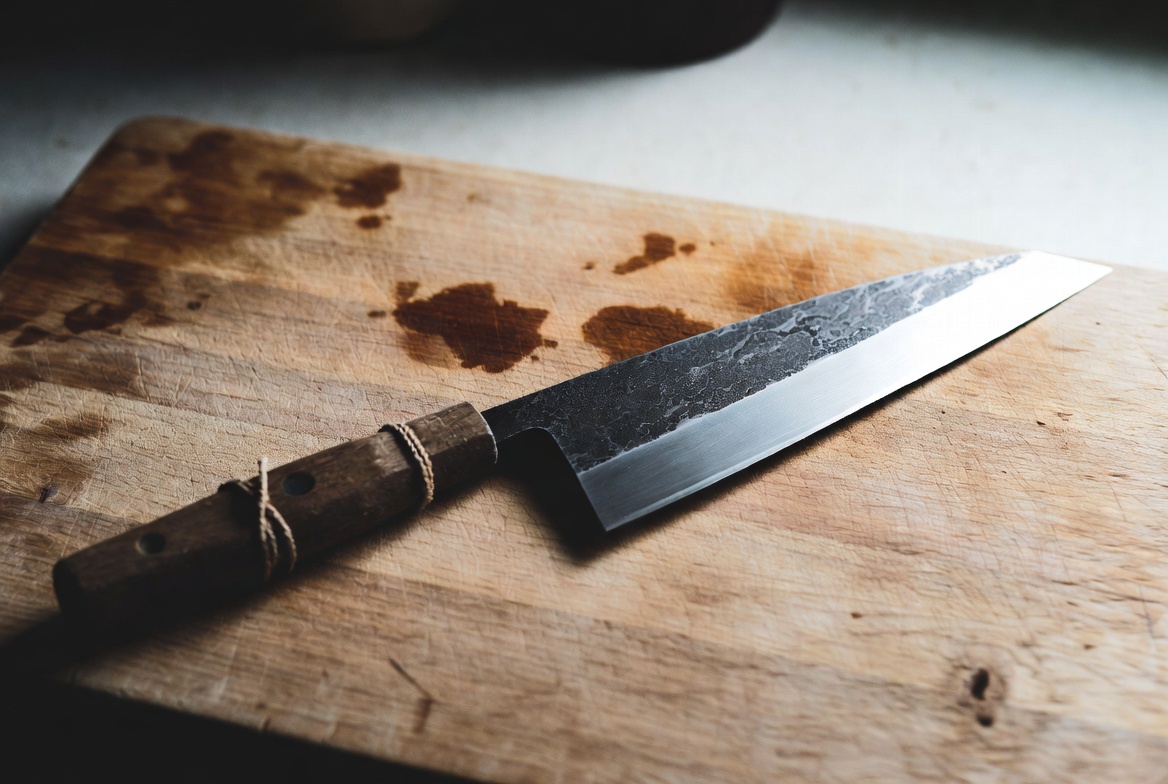
Hello everyone! This is Sushi Hatake.
Today, I want to share something it took me a year and a half to figure out — how to actually use a knife.
At First, I Only Watched My Hands
When I started filleting fish as a sushi chef, all I focused on was my hand movements.
I’d watch my mentor, then move the knife with a rough idea of “probably around here.”
Filleting, slicing sashimi — I did it all by feel.
It worked, to some extent. But something always felt off. I couldn’t put my finger on it.
The Discovery: The Back of the Blade
About 18 months in, I noticed something.
I started “sensing” with the back of the blade edge.
It’s hard to explain in words, but look at this image.
When filleting fish, we almost never push the knife straight down.
It’s always a pull to the side, or a diagonal motion.
That’s when I started paying attention to how the back of the blade edge “touches” the bones and flesh of the fish.
The Knife Became a Sensor
Once I started focusing on this, the amount of information coming through my hands increased dramatically.
When filleting with a deba knife, the basic job is following the bones and separating flesh from bone.
By “feeling” the bones with the back of the blade edge, I could guide the knife to glide right along the bone surface.
That’s when the knife stopped being a “cutting tool” and became a “sensing tool.”
This Feeling Can’t Be Taught
I’ll be honest.
This sensation is extremely hard to convey in words.
Even if I say “feel with the back of the blade,” it probably won’t click at first.
It took me 18 months.
But if you keep it in mind, one day it’ll suddenly make sense. You’ll think, “Oh, that’s what he meant.”
There’s no specific practice method.
Just keep filleting while holding the image of “sensing the fish with the back of the blade edge” in your mind.
That’s all I can say.
Why Does This Work? (My Theory)
Here’s my hypothesis on why this approach is effective.
1. The Blade Angle Stabilizes
Focusing on the back of the blade edge naturally stabilizes your angle. The vagueness of “probably around here” disappears.
2. Excess Tension Releases
To “sense,” you can’t grip too hard. Releasing tension allows for smoother movements.
3. A “Dialogue” with the Fish Begins
Bone position, flesh firmness, fiber direction — by receiving information through the knife, you can adjust your technique to each specific fish.
Summary: A Knife Is for Sensing
I used to think a knife was for cutting.
After 18 months, I realized: a knife is for sensing.
Feeling bones with the back of the blade. Feeling the flesh. Having a dialogue with the fish.
Once I developed this awareness, filleting became genuinely enjoyable.
If you’re struggling with knife technique, try holding the image of “sensing with the back of the blade edge.”
You might not get it right away. But keep it in mind, and someday it’ll click.
Sushi Hatake’s Mobile Catering & Sushi Experience
I apply this kind of attention to detail every time I make sushi.
I offer mobile sushi catering at homes and offices, plus hands-on sushi making experiences you can join empty-handed.
If you’re interested, feel free to reach out.
Learn more about our sushi catering service
Contact us / Make a reservation
Questions about knives or tools?
Every chef develops their own relationship with their tools. If you have specific questions about your knives, sharpening techniques, or cutting approach, I now offer one-question consultations via LINE.
- ¥1,500 per question
- Reply within 24–48 hours
- You can attach 1–3 photos with your question
※ Payment for international clients: please contact us separately via LINE for arrangements.